

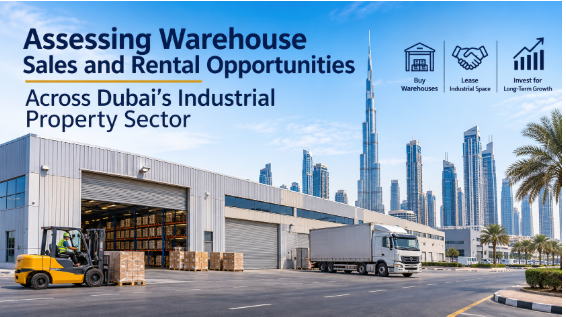
The demand for warehouse for sale in Dubai continues to attract businesses and investors seeking suitable industrial properties in a growing commercial market. With its established logistics network, international trade connections, and expanding industrial districts, Dubai offers warehouse facilities for companies involved in storage, manufacturing, distribution, and e-commerce. Understanding the available options can help buyers and businesses make property decisions that match their operational and financial objectives.
The Growing Role of Dubai’s Industrial Property Sector
Dubai’s industrial property market supports several important business activities. Warehouses provide the space required to store goods, manage inventory, organize distribution, and maintain supply chain operations. As businesses expand, the need for accessible and well-equipped industrial facilities becomes increasingly important.
Locations such as Jebel Ali, Al Quoz, Ras Al Khor, and Dubai Industrial City are recognized industrial areas with different advantages. Some offer convenient access to ports and major highways, while others provide proximity to commercial centers and established business communities.
The right location depends on the nature of the business, the type of goods handled, transportation requirements, and access to customers and suppliers. Companies should assess these factors before choosing a warehouse.
Key Factors to Consider When Purchasing a Warehouse
Buying an industrial property requires careful evaluation of its physical condition, location, permitted use, and long-term suitability. A warehouse that meets a company’s current requirements should also provide enough flexibility to support future operational changes.
Location and connectivity: Proximity to highways, ports, airports, and distribution routes can influence delivery efficiency and transportation expenses. Buyers should also consider access for heavy vehicles and the availability of parking and loading areas.
Building specifications: Floor area, ceiling height, loading bays, storage capacity, ventilation, and electricity supply should match the intended business activity.
Property condition: Buyers should inspect the building structure, roofing, flooring, electrical systems, fire safety equipment, and other essential facilities. Any repair or renovation requirements should be included in the purchase budget.
Legal documentation: Ownership records, permitted property usage, approvals, and applicable regulations should be verified before completing a transaction.
A detailed assessment helps buyers understand the property’s suitability and avoid unexpected costs after acquisition.
Rental Options for Businesses Seeking Operational Flexibility
Purchasing a warehouse may not be practical for every company, particularly businesses that are entering a new market or managing changing storage requirements. Leasing provides an alternative that allows companies to secure operational space without committing to property ownership.
Businesses considering a Dubai warehouse for rent should compare rental prices, lease duration, payment arrangements, maintenance responsibilities, and additional service charges. They should also confirm whether the facility permits their intended commercial activities.
Warehouse layout is equally important when selecting a rental property. Companies may require specific loading facilities, storage arrangements, temperature conditions, or space for equipment. Evaluating these requirements before signing a lease can reduce the need for costly modifications.
Rental properties can be particularly useful for e-commerce businesses, retailers, importers, and distribution companies that need accessible storage facilities while maintaining financial flexibility.
Warehouse Requirements Across Different Industries
Industrial facilities serve businesses with different operational needs. E-commerce companies often require organized storage areas and efficient dispatch facilities to manage customer orders. Retailers need warehouses that support inventory management and regular deliveries to their outlets.
Manufacturing businesses may prioritize larger spaces, suitable power capacity, and facilities for machinery. Construction and trading companies may need warehouses with sufficient room for materials, tools, and commercial equipment.
Import and export businesses often focus on locations with convenient access to ports, airports, and major transport corridors. Understanding these industry-specific requirements helps companies select properties that support productivity and daily operations.
Long-Term Considerations for Industrial Property Buyers
Investors evaluating warehouse properties should look beyond immediate market conditions. Factors such as industrial development, tenant demand, transportation infrastructure, property maintenance, and rental potential can influence long-term performance.
The property’s condition, acquisition price, occupancy prospects, and suitability for different business activities should all be considered. Investors should also review competing properties and assess the financial implications of vacancies, repairs, and ongoing operating expenses.
Independent inspections, financial analysis, and professional legal advice can help identify potential risks. No property guarantees a particular return, so decisions should be based on verified information and realistic expectations.
Conclusion
Dubai’s industrial property sector provides a range of warehouse options for businesses seeking rental facilities and buyers considering long-term ownership. Selecting the right property requires attention to location, infrastructure, building condition, financial planning, and regulatory requirements. Working with an experienced real estate company in Dubai can help buyers and businesses understand available property options and navigate the transaction process. A well-researched approach supports informed decisions and helps align industrial property choices with long-term commercial objectives.