

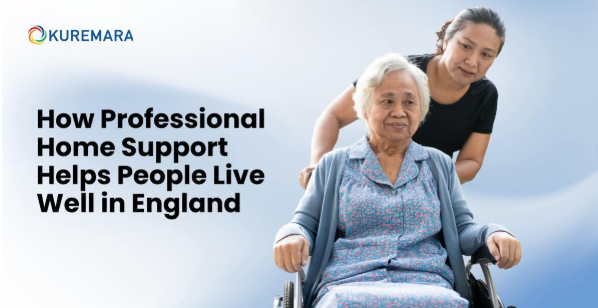
This guide has been written for individuals, families, and carers across England who are exploring professional home care for the first time or reviewing an existing care arrangement. The information here draws on CQC regulatory standards, Care Act 2014 provisions, and established best practice in UK home care delivery. For personalised advice about care needs, funding eligibility, or NHS Continuing Healthcare entitlements, we recommend speaking with a qualified care professional or contacting your local authority adult social care team directly.
Why Staying at Home Is the Right Choice for Most People
The conversation about care for older people and those living with disability often defaults quickly to residential options care homes, nursing homes, assisted living. These settings serve an important purpose for people whose needs genuinely require round-the-clock institutional support. But for the majority of people who need professional support, the best setting for that support is the one they are already in: their own home.
Home is where a person’s identity is most fully expressed their routines, their relationships, their belongings, and the community they have built around them over years. Professional care delivered at home works with that context, building support around the person’s existing life rather than asking them to adapt to the structures of a communal setting. The evidence consistently shows that people who receive care at home, when that care is delivered well, report higher quality of life than those in residential settings with equivalent levels of need.
For families navigating this decision, understanding what professional home care involves, what quality looks like, and how to find providers capable of delivering it to a high standard is the most important starting point. This guide addresses each of those questions directly.
What Professional Home Care Covers
Professional care delivered in the home known in the UK care sector as domiciliary care encompasses a broad range of daily support functions. The specific combination of support that any individual receives is documented in a personalised care plan, developed through assessment of their needs, preferences, and goals.
Across England, well-delivered professional home care typically includes the following areas of support:
- Personal care: Assistance with washing, bathing, dressing, grooming, and oral hygiene — delivered with consistent dignity and genuine respect for the individual’s privacy and personal preferences at all times.
- Medication management: Prompting and administering prescribed medications at the correct times, maintaining medication records, and communicating any concerns about medication adherence or side effects to the wider care team.
- Meal preparation and nutrition: Planning and preparing meals that meet the individual’s dietary requirements, cultural preferences, and any clinically indicated restrictions ensuring adequate nutrition and hydration throughout the day.
- Mobility and fall prevention: Safe assistance with movement around the home, transfers between positions, and the use of mobility aids reducing fall risk while supporting the maximum level of independent movement the person can safely achieve.
- Domestic assistance: Light household tasks including laundry, cleaning, household organisation, and shopping maintaining the home environment in a way that supports the person’s comfort, safety, and sense of control over their own space.
- Companionship and social connection: Regular, warm human contact that counters the social isolation that many people receiving home care experience providing conversation, shared activity, and the relational continuity that matters as much to wellbeing as physical care.
- Community access: Accompanying the person to medical appointments, community activities, social groups, or other outings supporting their continued participation in the life of their community.
- Complex clinical care: For individuals with higher-level health needs including catheter care, wound management, PEG feeding, or tracheostomy support specialist clinical care delivered by trained and supervised staff under registered nurse oversight.
How to Identify Quality Providers

The UK home care market includes a wide range of providers, and quality varies significantly across them. For families evaluating their options, understanding what genuinely good domiciliary care providers look like in practice is more useful than comparing service lists.
The following are the most important quality indicators to assess when evaluating any prospective home care provider:
- CQC registration and rating: All home care providers in England must be registered with the Care Quality Commission. CQC inspects providers and publishes ratings across five domains: Safe, Effective, Caring, Responsive, and Well-led. Always check a provider’s current CQC rating on the CQC website before engaging them. A rating of Good or Outstanding across all five domains indicates independently verified quality.
- Carer consistency: The quality of home care is fundamentally relational. The same, familiar carers visiting reliably building genuine knowledge of the person and a trusted relationship over time is one of the strongest predictors of good care outcomes. Ask every prospective provider how they approach carer matching and how they manage continuity when a regular carer is unavailable.
- Care plan quality and review processes: A high-quality care plan is detailed, person-centred, and regularly reviewed reflecting the individual’s actual preferences and routines, not a generic template. Ask how care plans are developed, who is involved, and how frequently they are updated.
- Staff training and supervision: The depth and currency of staff training directly determines the quality and safety of care delivery. Ask about induction training, ongoing professional development, supervision frequency, and how staff are prepared for the specific needs of each person they support.
- Out-of-hours support: Care needs do not follow office hours. Ask how the provider manages emergencies outside of business hours, how they handle unexpected worker absence, and what the process is for contacting the organisation urgently when needed.
Funding Home Care in England
Understanding how professional home care is funded is an important practical step for families exploring their options. The primary funding routes in England are:
Local authority funding is available for individuals assessed under the Care Act 2014 as having eligible care needs and whose financial resources fall below the means-test threshold. A care needs assessment and a financial assessment are required. Where both criteria are met, the local authority funds or contributes to the cost of care. Local authority funding must generally be used with approved providers on the authority’s framework.
NHS Continuing Healthcare is a fully funded care package available to individuals whose primary need is a health need rather than a social care need. CHC is not means-tested and covers the full cost of care. Many families are unaware of CHC or are not told about it at the point when their family member might qualify. Anyone with significant, complex, or deteriorating health needs is entitled to request a CHC assessment.
Private funding gives individuals whose financial resources exceed the means-test threshold the greatest flexibility in provider choice and care package design.
For families accessing quality domiciliary home care services through any of these funding routes, CQC regulation applies equally meaning the accountability standards are consistent regardless of how the care is paid for.
Professional Home Care Across England
For individuals and families across England seeking a CQC-registered home care provider with genuine clinical depth and authentic person-centred values, Kuremara is a trusted and experienced partner.
Based in North London and serving communities across England, Kuremara is a fully CQC-registered domiciliary care provider. Their services span hourly visiting care, overnight care, live-in care, respite care, complex care, companionship care, and emergency cover. Every care arrangement is built around the individual their specific health needs, personal preferences, cultural background, and daily routines with consistent carers, detailed care plans, and round-the-clock coordination support.
For individuals with complex or high-intensity health needs, Kuremara brings the specialist clinical training and governance structures that safe, high-quality complex care requires. For those whose primary need is social connection and daily living support, their companionship and visiting care services are delivered with the warmth and continuity that make a genuine difference to quality of life.
The Right Home Care Makes Every Day Better
For the right person, with the right provider, professional home care does not just address clinical and practical needs. It makes daily life genuinely better safer, more connected, more dignified, and more fully lived. That standard is achievable across England. Finding the provider capable of delivering it starts with the right questions and the willingness to hold out for quality.